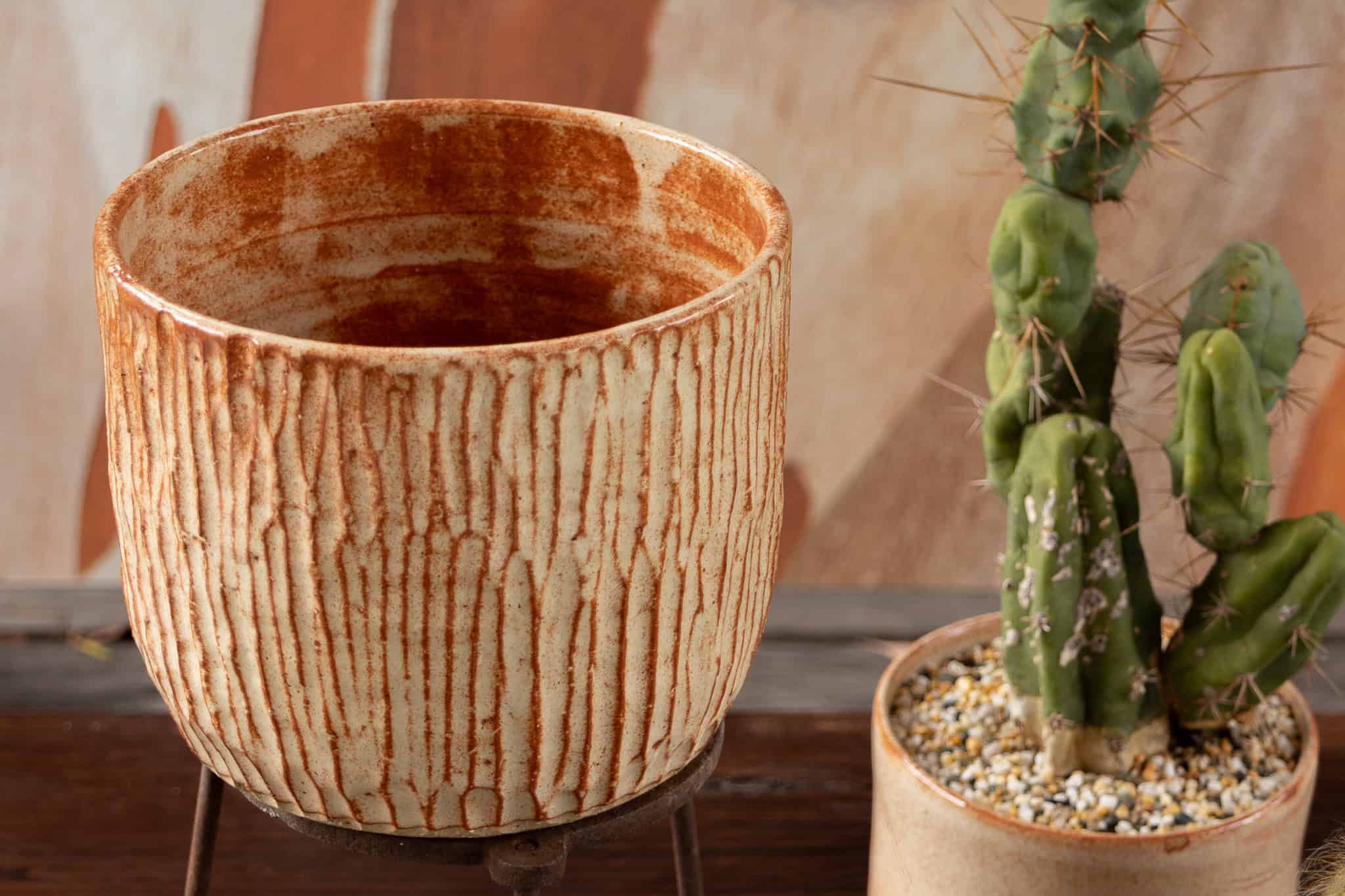
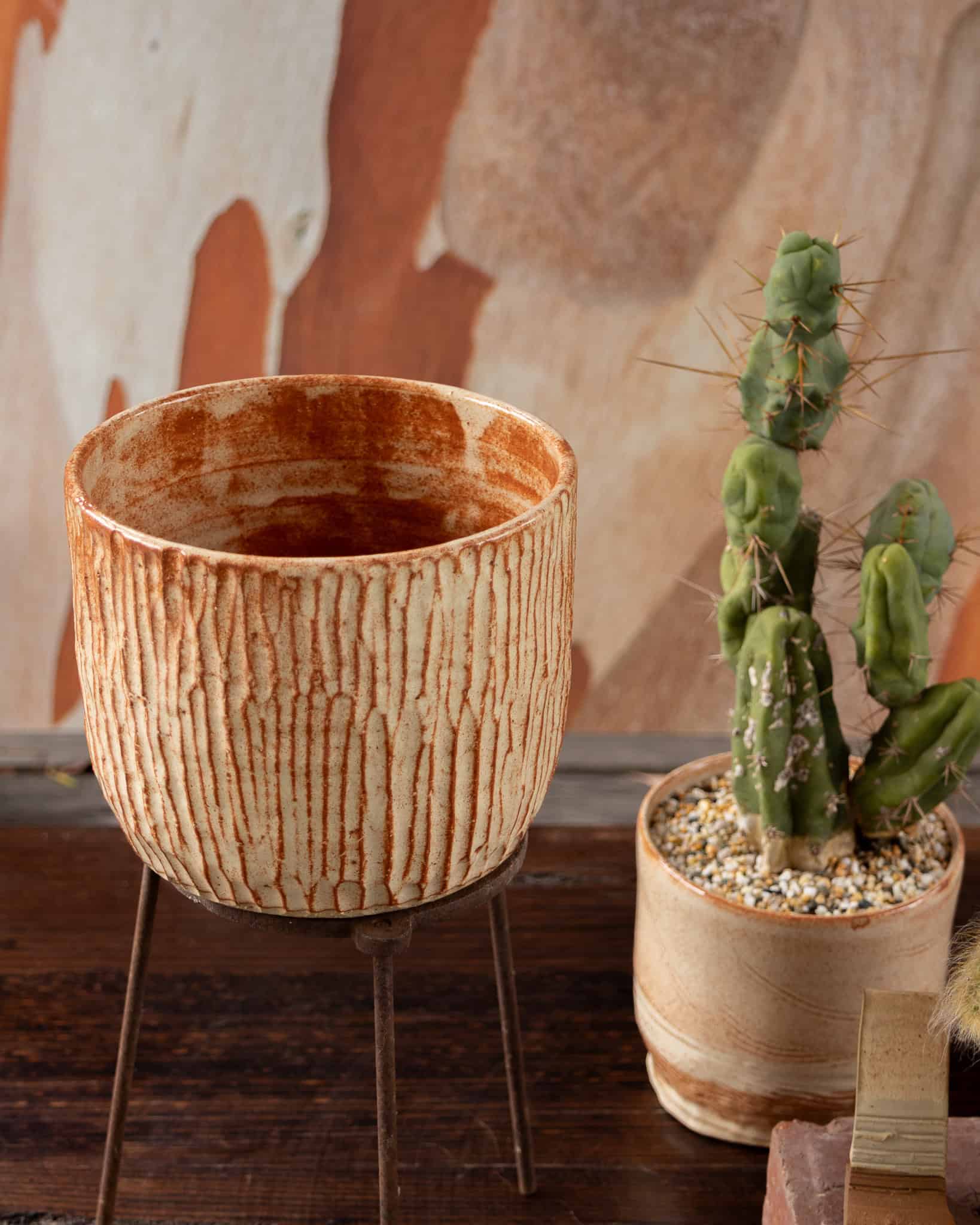
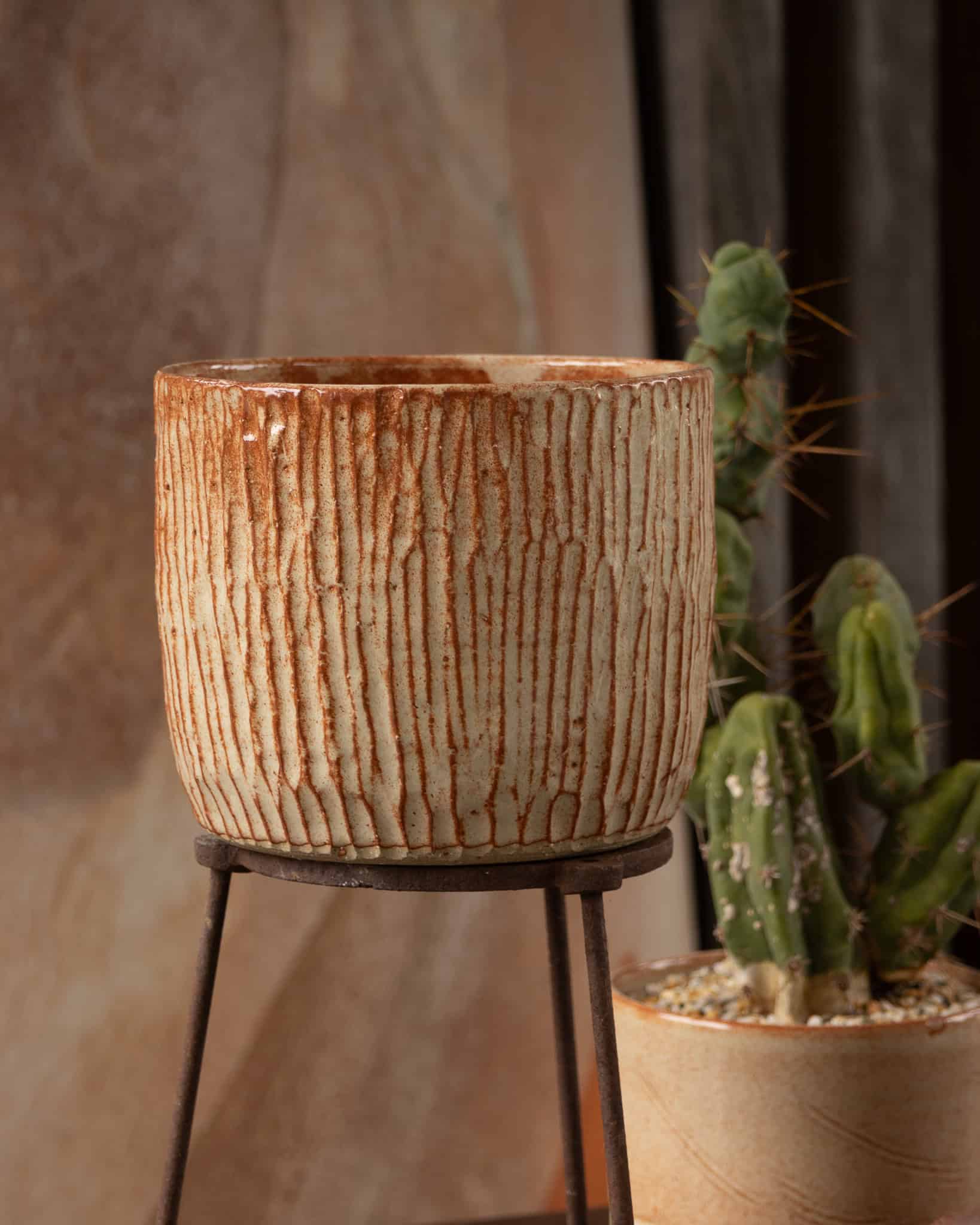
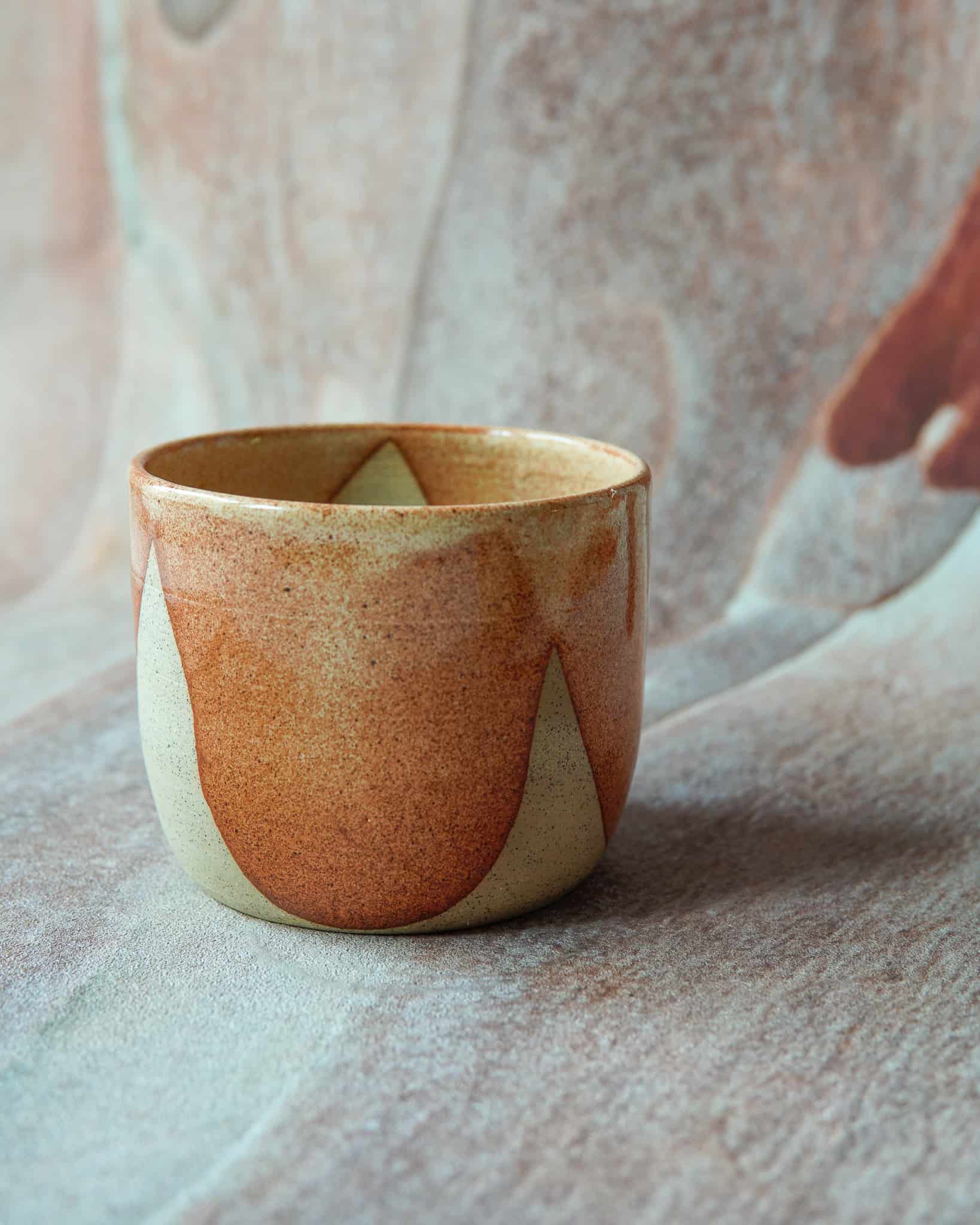
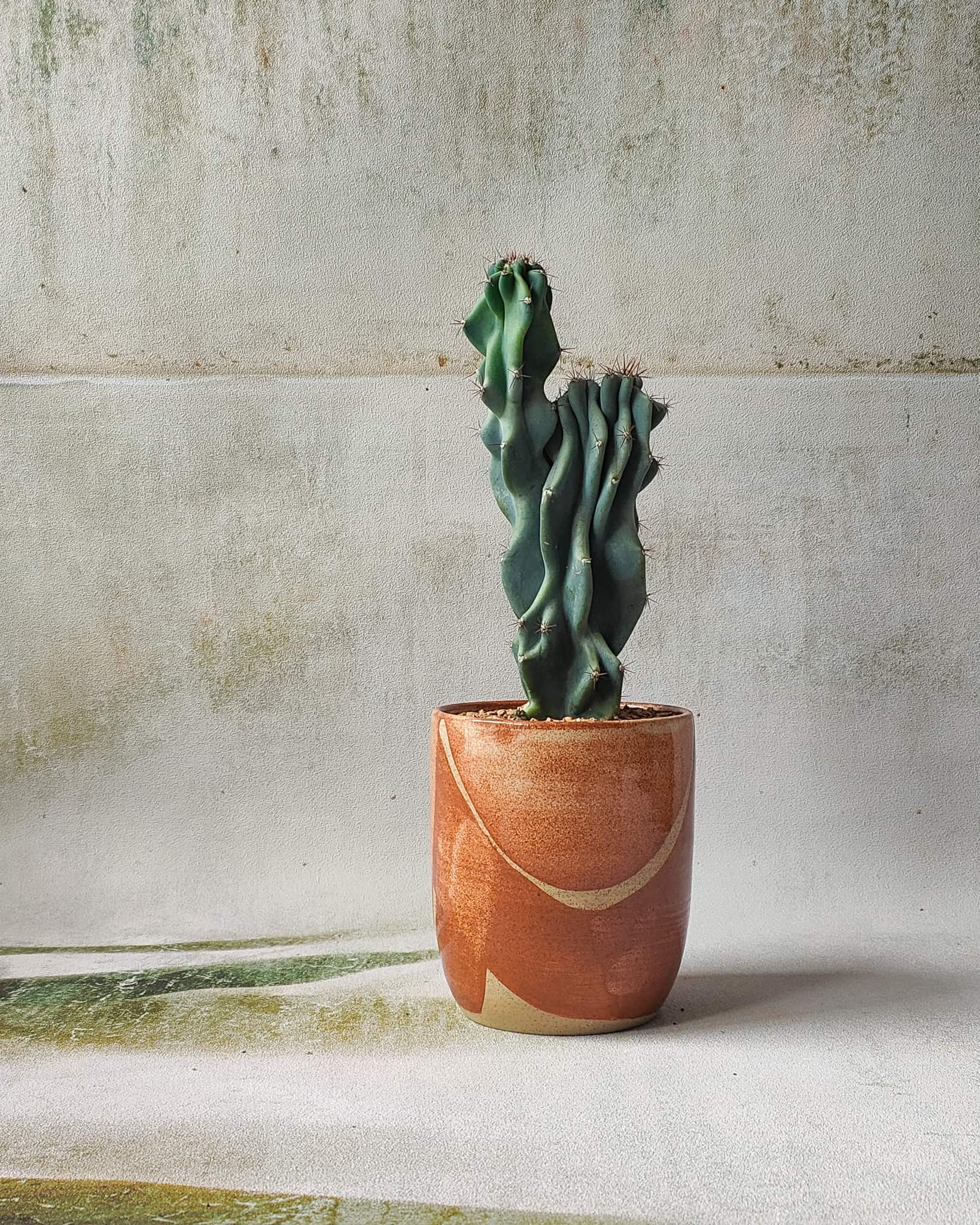
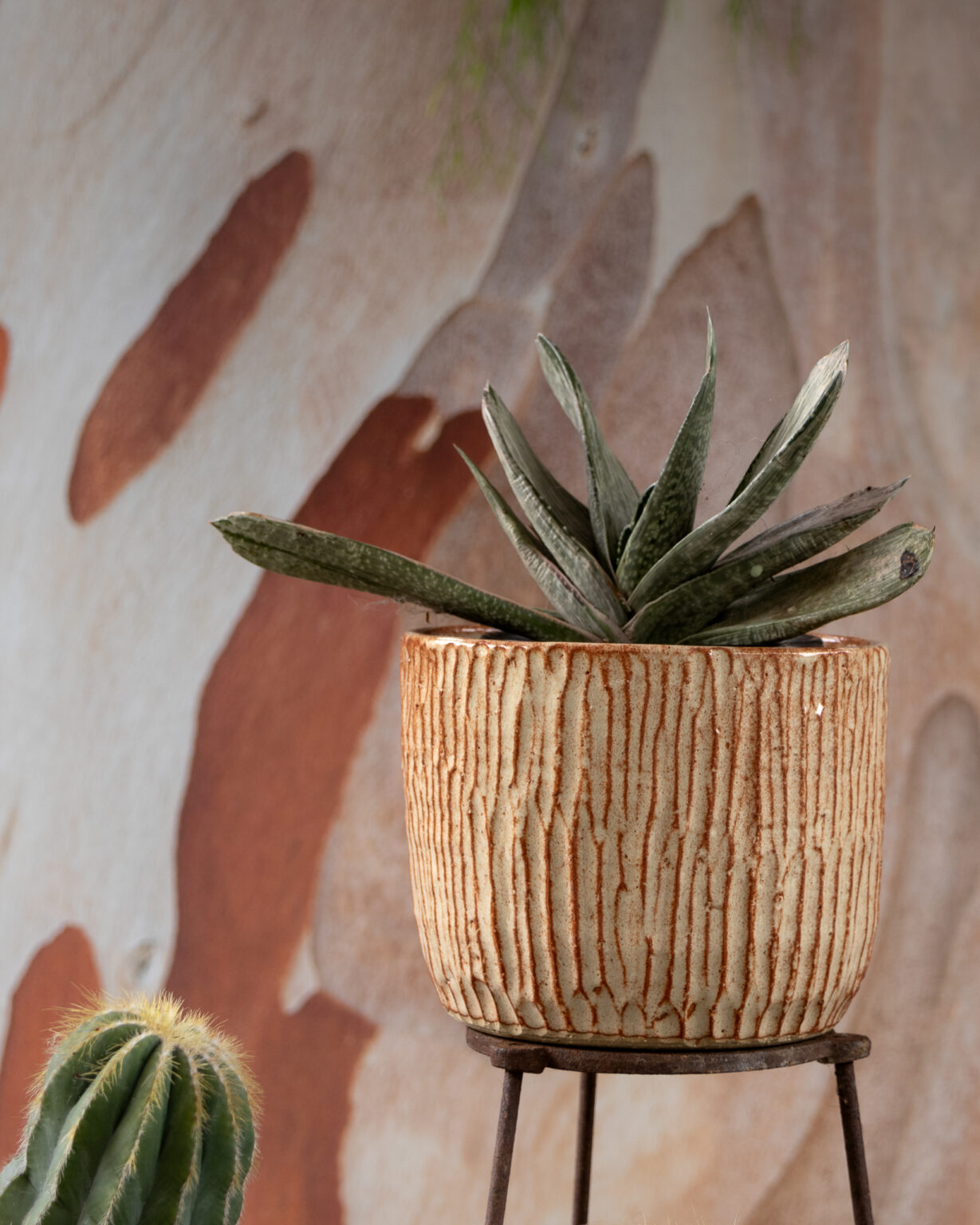
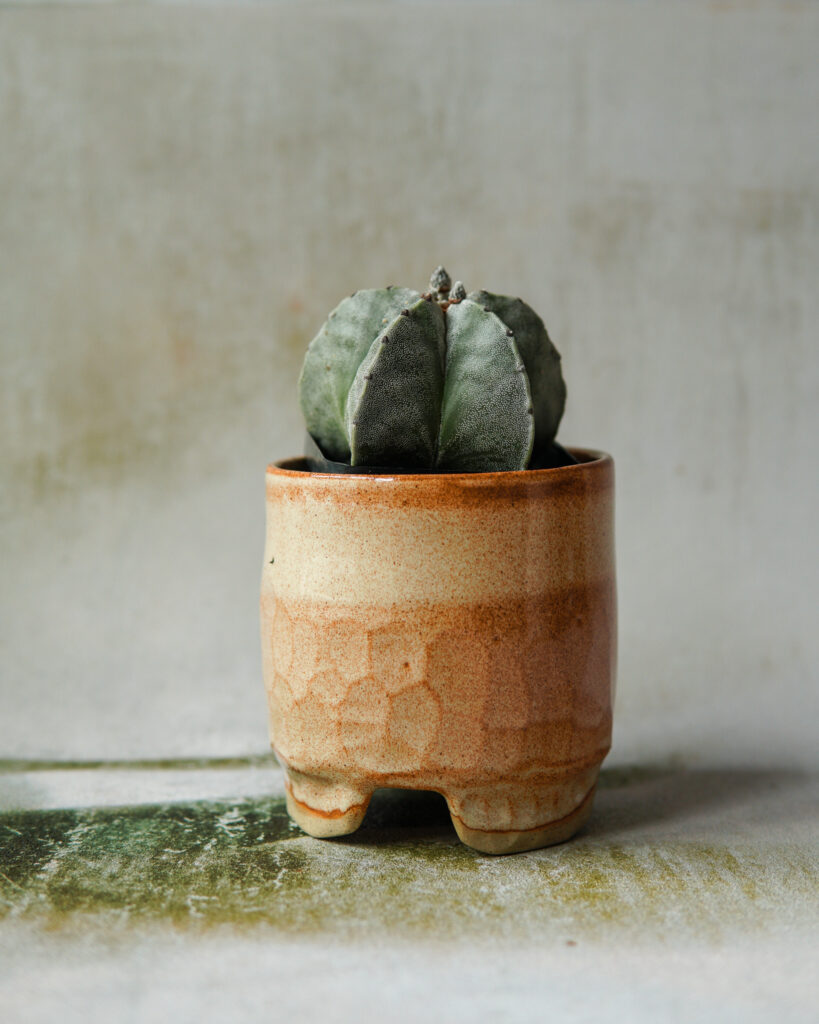
Folk Art was one of the first glazes the I created out of John Britt’s The Complete Guide to Mid Fire Glazes. I had a few issues initially with thickness, particularly when layered over other glazes. I thinned the glaze so that this was no longer an issue and often use it as a stand alone glaze. Glaze application matters with colour too. Thin applications produce an iron rich colour moving to white speckled rust with a thicker application. Iron rich clays that are textured enhance the rust colour too as the glaze breaks or thins over the texture.
Basics:
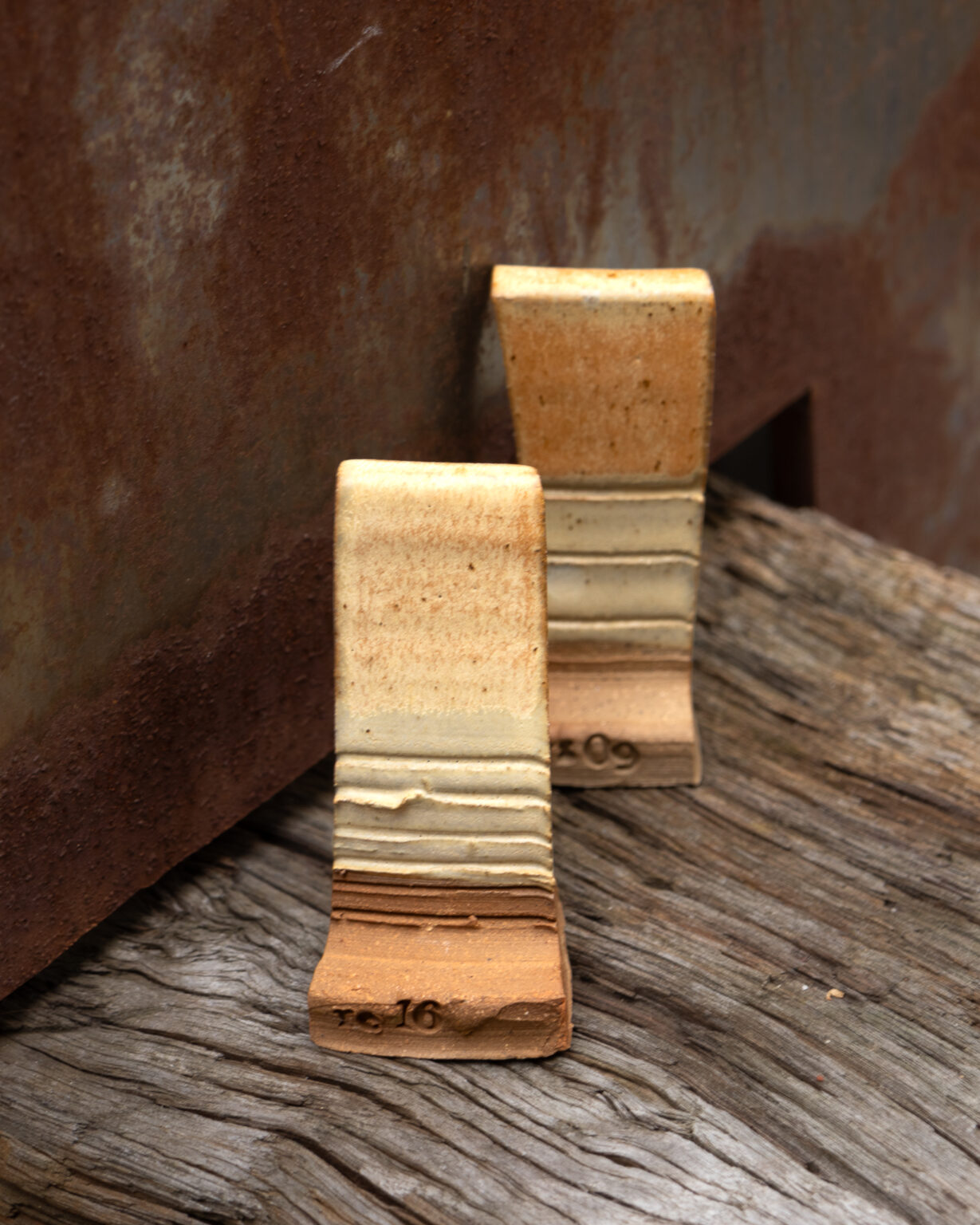
I created some test tiles with a matte based, off white glaze because I like the interplay of a gloss glaze with a matte glaze and the reactions that sometimes occur as they meld into one another. Here I have applied Folk Art over a matte base glaze that has 10% Titanium added to it. Both glazes are quite stable so folk art doesn’t run into the matte base, in this case it just sits over the matte base. I could separate the layers with just Folk Art at the top and Matte T10 at the base.
Folk Art is a beautiful glaze for planters particularly where texture has been added to really accentuate the iron in the glaze against the white. The planter to the right has just come out of the kiln. Also when dipped thinly the results are equally pleasing, see image below and the image at the bottom
Et Al Ceramics is a small ceramics studio in Williamstown. The intention of this blog is to share in note / journal form what’s happening in the studio and life in general.Looking forward to feedback and connectivity.


These are so beautiful 🙂
Thanks Michelle